

Which Cadillac SUV fits our family? The answer isn't the same for every household in Brandon. It depends on two rows versus three, a daily electric commute versus a boat-trailer weekend, and whether the rear seats need to hold adults or just fold flat for Costco runs now and then. We work through all three models on our lot, and the thing that separates them is rarely brand or prestige. It comes down to size, configuration, and whether the family charges at home.
Below is how the 2026 Cadillac XT5, the 2026 Cadillac VISTIQ, and the Escalade family actually compare when you measure them against what Brandon households need.
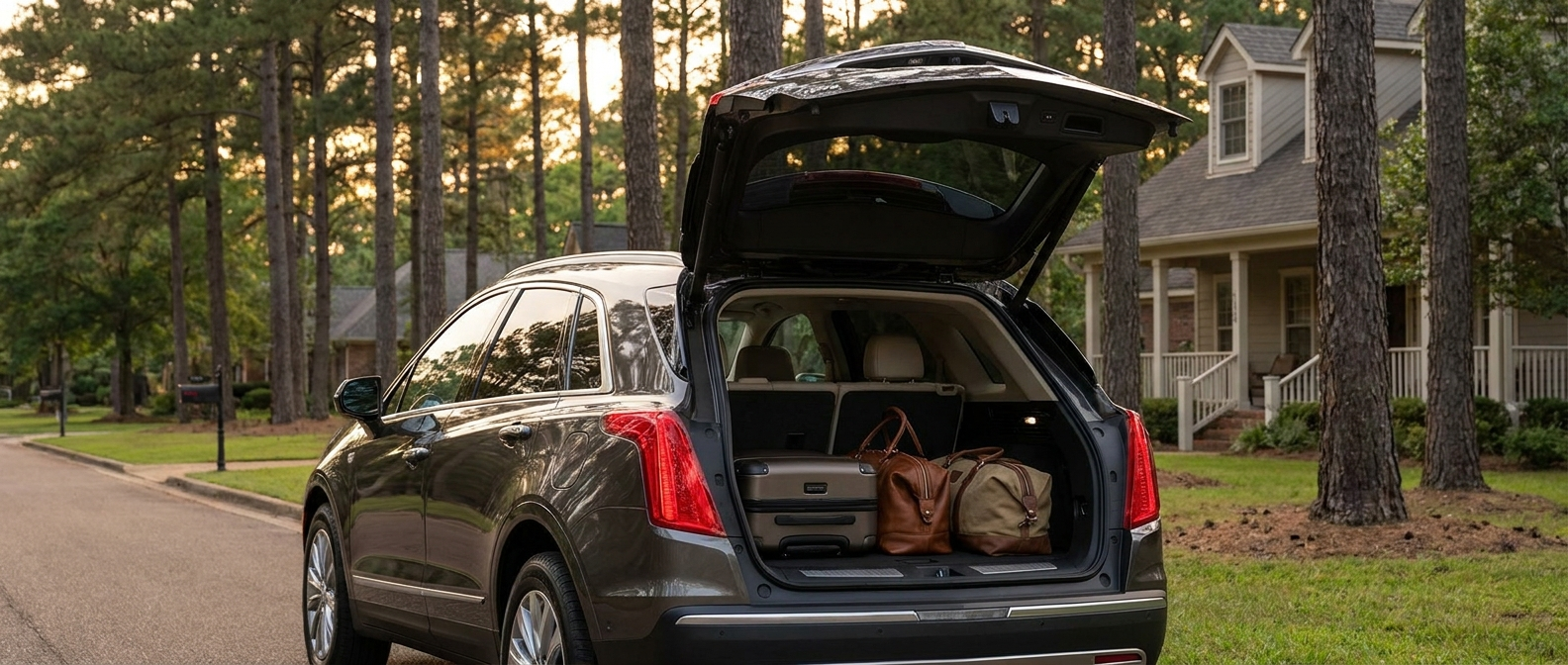
- XT5: The choice for established couples or small families who want two refined rows, 63 cubic feet of cargo flat, and a cabin that makes the I-20 run to Ridgeland feel like nothing.
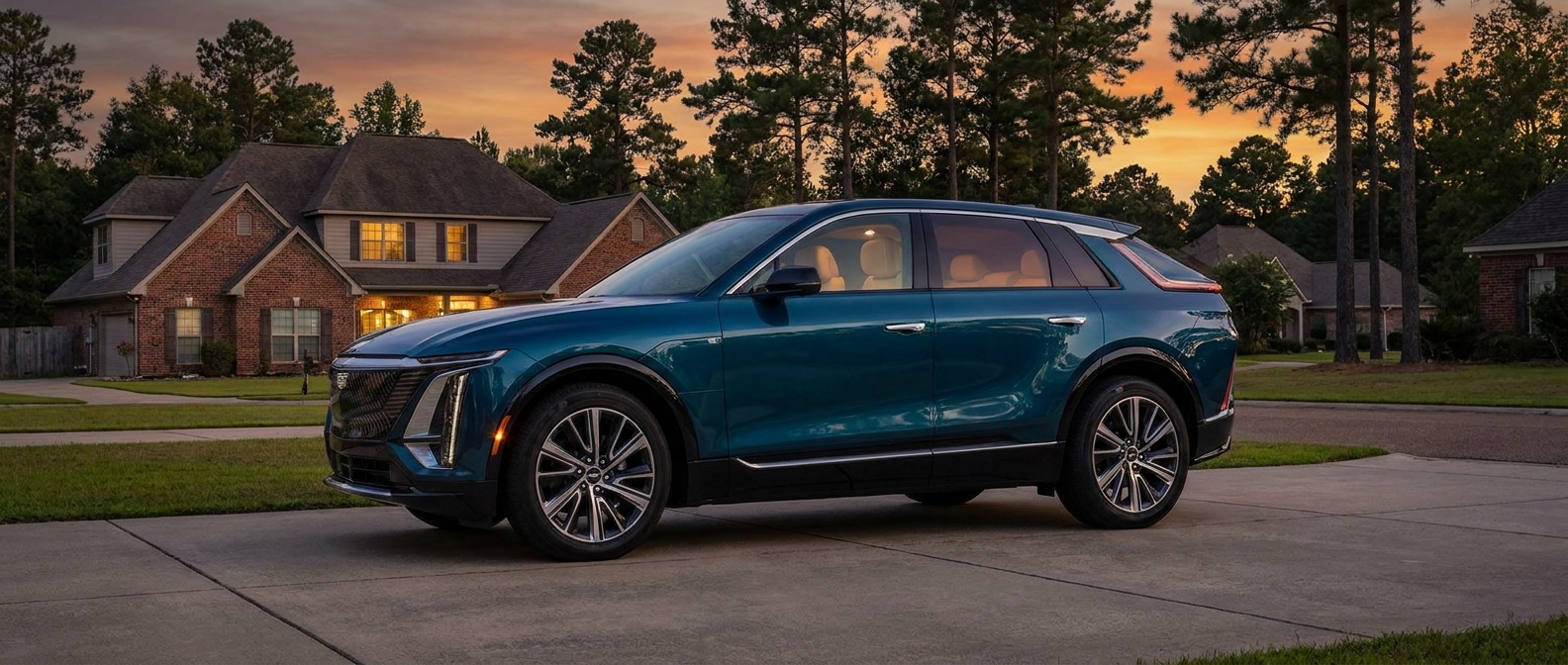
- VISTIQ: The choice for a family that needs a genuine, adult-usable third row, wants to do most of its driving on a single charge, and is ready to plug in at home each night.
- Escalade / Escalade ESV: The choice when the third row gets used every trip, a trailer is in the picture, or the household simply needs the most presence and interior space Cadillac builds.
- The tradeoff: The XT5 gives up the third row. The VISTIQ's cargo behind that third row is tight. The Escalade ESV solves both but asks for more garage.
How Do These Three Cadillac SUVs Actually Compare?
These three sort cleanly by size and powertrain, with the XT5 covering five seats, the VISTIQ and Escalade covering seven, and the Escalade ESV adding a tow hook plus roughly fifteen more feet of vehicle, so once you lay the matrix flat the choice gets a lot more practical. The spread is wide.
The Escalade ESV stands alone on cargo and towing; the VISTIQ is the only electric three-row in the lineup; and the XT5 is the one you choose when two rows and a quieter footprint are exactly right.
| Spec | 2026 XT5 | 2026 VISTIQ | 2026 Escalade | 2026 Escalade ESV |
|---|---|---|---|---|
| Rows / Seating | 2 rows / 5 | 3 rows / 7 | 3 rows / 7 | 3 rows / 7-8 |
| Cargo behind 3rd row | n/a | 15.2 cu ft | 25.5 cu ft | 41.5 cu ft |
| Cargo behind 2nd row | 30 cu ft | 43 cu ft | 72.9 cu ft | 94.1 cu ft |
| Max cargo (all rows flat) | 63 cu ft | 80.2 cu ft | 120.5 cu ft | 142.2 cu ft |
| Powertrain | 2.0T / 3.6L V6 (gas) | Dual-motor EV | 6.2L V8 (gas) | 6.2L V8 (gas) |
| Power output | 235-310 hp | 615 hp | 420 hp | 420 hp |
| Towing capacity | Up to 3,500 lbs | Towing not recommended for range | Up to 8,100 lbs | Up to 8,000 lbs |
| EPA estimate | 24 mpg combined (FWD 2.0T) | 305 miles / 86 MPGe combined | Varies by config | Varies by config |
| Overall length | 189.6 in | 205.6 in | 211.9 in | 226.9 in |
| Best for | Couples, small families, commuters | Families needing 3 rows + EV range | Large families, towers | Maximum cargo + adult 3rd row |
Which Model Does the Third Row Change Everything For?
Among Brandon and Rankin County families, the third row is the single spec that reorders this whole lineup, and the XT5 settles its own case immediately by not having one, which stays a deliberate engineering choice that keeps the cabin proportions tight and the driving character intact rather than any kind of flaw. If your household runs two adults and maybe one child in the second row, the XT5's 30 cubic feet behind that seat (and 63 flat) swallows school gear, weekend luggage, and a Costco trip without asking anything of you.
The gap opens once a third row becomes genuinely necessary. Cadillac rates the VISTIQ third-row legroom on a 122-inch wheelbase, and independently published road tests confirm adults can ride back there without folding their knees into the seatback. The Escalade does the same for seven, and the Escalade ESV extends that third-row comfort by an additional 1.8 inches of legroom (36.7 inches versus 34.9 in the standard wheelbase, per Cadillac specifications).
For families with three kids in school, or households that routinely move a full complement of adults, the jump from the XT5 to the three-row options reads less like a trim upgrade and more like a different vehicle class entirely.
Does the VISTIQ's Electric Range Actually Work for Brandon Families?
It works for most Brandon families, and the math behind that is specific, since the EPA estimates 305 miles of range for the 2026 VISTIQ on the standard 11.5-kW charger configuration, and Brandon sits roughly 25 miles east of Ridgeland on I-20 and Highway 80, so a round trip to our showroom and back adds about 50 miles to a charge. Add school runs, the occasional trip up to the reservoir, and a typical day of Rankin County driving, and the VISTIQ's daily range clears that routine without ever needing a public charge, reservoir mornings included.
The genuine tradeoff for the VISTIQ sits at the cargo wall behind that third row, where you get 15.2 cubic feet with all seven seats occupied. A weekend bag each is about the limit. Pack a hockey tournament's worth of gear with a full load of passengers, and you'll run out of room fast. The VISTIQ's maximum cargo space of 80.2 cubic feet (second and third rows down) is competitive for a midsize SUV, and 43 cubic feet behind the second row is generous. But if the family needs all seven seats in use and substantial cargo at the same time, the Escalade ESV's 41.5 cubic feet behind its third row makes that easier.
The VISTIQ pairs dual-motor all-wheel drive with 615 horsepower as standard. Its EPA combined efficiency estimate lands at 86 MPGe.
For a household that charges nightly at home, the VISTIQ replaces a fuel stop entirely on most weekdays.
| VISTIQ | Escalade ESV | |
|---|---|---|
| Pros | EPA-estimated 305 mi range; 615 hp; EV running costs; 7 seats | 41.5 cu ft behind 3rd row; tows up to 8,000 lbs; adult-usable 3rd row; 142.2 cu ft max cargo |
| Cons | 15.2 cu ft behind 3rd row (seats up); no meaningful tow capacity | Fuel cost of a 6.2L V8; 226.9 inches long; not for households that want EV running costs |
The Ross Barnett Reservoir makes a natural reference point here. A family heading out on a Saturday morning, boat in tow, needs either the Escalade or the Escalade ESV, and none of that is a knock on the VISTIQ. Physics does the deciding. Trailer loads cut sharply into an EV's range, and the VISTIQ isn't rated for meaningful towing, so if the trailer comes out often, the 6.2-liter V8 in the Escalade (rated to tow up to 8,100 pounds properly equipped, per Cadillac specifications) is the straight answer.
How Do You Match the Right Cadillac to Your Family's Actual Week?
Matching the right Cadillac to your week starts with a sharper question than seat count, because what settles the decision is which seats you actually fill and how often, and three household profiles sort that out almost automatically once you picture a normal week. Most families recognize themselves inside a sentence or two.
The five-passenger household with highway commutes. Both adults commute, the rear seat holds one or two children, and the weekend trip is luggage plus cargo, not a trailer or a full third row. The XT5 fits this household precisely. Its 2.0-liter turbocharged four-cylinder earns an EPA estimate of 22 city / 29 highway / 24 combined (FWD configuration), which matters on the I-20 corridor where daily mileage adds up. At 189.6 inches overall, it also garages cleanly in the standard two-car setups common in Brandon neighborhoods.
The seven-seat family that commutes daily and charges at home. This household fills all three rows on a regular basis, has a Level 2 charger in the garage (or plans to install one), and doesn't pull a trailer. The VISTIQ is built for exactly that profile. Its 305-mile EPA estimate clears a full week of Rankin County driving on a single charge cycle with margin to spare. The cabin carries the same technology suite and material standard as the rest of Cadillac's electric lineup.
The household that needs everything. Full three-row seating, real cargo behind that third row, towing capacity for a boat or trailer, and enough interior space for a long drive to the Gulf Coast or beyond. The Escalade ESV is the answer. Its 41.5 cubic feet behind the third row (versus 25.5 in the standard Escalade) and 142.2-cubic-foot maximum cargo capacity aren't close to anything else in the lineup. At 226.9 inches, it's a vehicle that asks for a larger garage bay or a driveway with room to spare.
Frequently Asked Questions
Does the Cadillac XT5 have a third row?
No. The 2026 XT5 is a two-row, five-passenger SUV. Cadillac built it to prioritize second-row comfort and cargo versatility over raw passenger count, giving the rear seat 39.0 inches of legroom and the cargo area 30 cubic feet behind it, expanding to 63 cubic feet with the seats folded. If a third row's a genuine requirement, the VISTIQ and the Escalade family are where you start.
How far can the 2026 Cadillac VISTIQ travel on a full charge?
The EPA estimates 305 miles of range for the 2026 VISTIQ in standard 11.5-kW charger configuration. That figure covers round-trip Brandon-to-Ridgeland commutes and routine Rankin County driving with meaningful charge remaining. Towing or carrying a maximum load reduces the available range, as it does on any EV, so households that regularly pull a trailer should look at the Escalade's 6.2-liter V8 platform instead.